
At just 18 years of age, Anahat Singh has achieved what no Indian squash player had ever done before. The young Delhi-born star created history by becoming the first Indian to win the World Junior Squash Championship title, ending a long era of Egyptian dominance in the sport.
Playing in Niagara-on-the-Lake, Canada, Anahat delivered a performance that will be remembered for years. In the final, the top-seeded Indian defeated Egypt’s second seed Ruqayya Salem in straight games, winning 11-3, 11-7, 11-9. More than just a title victory, it was a statement of arrival on the biggest junior stage.

For 16 consecutive years, the World Junior Squash Championship crown had belonged to players from Egypt or of Egyptian origin. Anahat broke that remarkable streak without dropping a single game in the final, proving that Indian squash has a new superstar ready to challenge the world’s best.
Her journey to the title was not easy. In the quarterfinal and semifinal rounds, Anahat defeated two more Egyptian opponents, beating Barb Sameh 3-1 and Habiba Rizk 3-1. Defeating one Egyptian player is a challenge in itself, but overcoming three in a row on the way to the championship showcased her extraordinary confidence, skill and mental strength.
The triumph was even more special because Anahat became the first Indian finalist at the World Junior Championship in over two decades, since Joshna Chinappa’s appearance in 2005.
Earlier this year, Anahat had already decided that this would be her final junior tournament as she shifted her focus towards the senior circuit. She entered the competition with one clear goal, to change the colour of her medal after winning bronze last year. She dominantly achieved that dream.
Anahat’s rise has never been a surprise for those who have followed her journey. She made her senior international debut for India at only 14 years old during the 2022 Commonwealth Games and went on to win medals at the Asian Games at 16.
With squash set to make its Olympic debut, expectations around her have grown rapidly. Still, the teenager has consistently delivered under pressure, including back-to-back India Open titles in Mumbai.
Behind this historic achievement stands another Indian squash pioneer, Saurav Ghosal, the country’s first-ever player to break into the world’s top 10. After spending nearly two decades creating milestones of his own, including becoming the first Indian to reach the World Championship quarterfinals in 2013 and entering the top 10 rankings in 2019, Ghosal has now taken up a new role building the next generation of Indian squash stars.
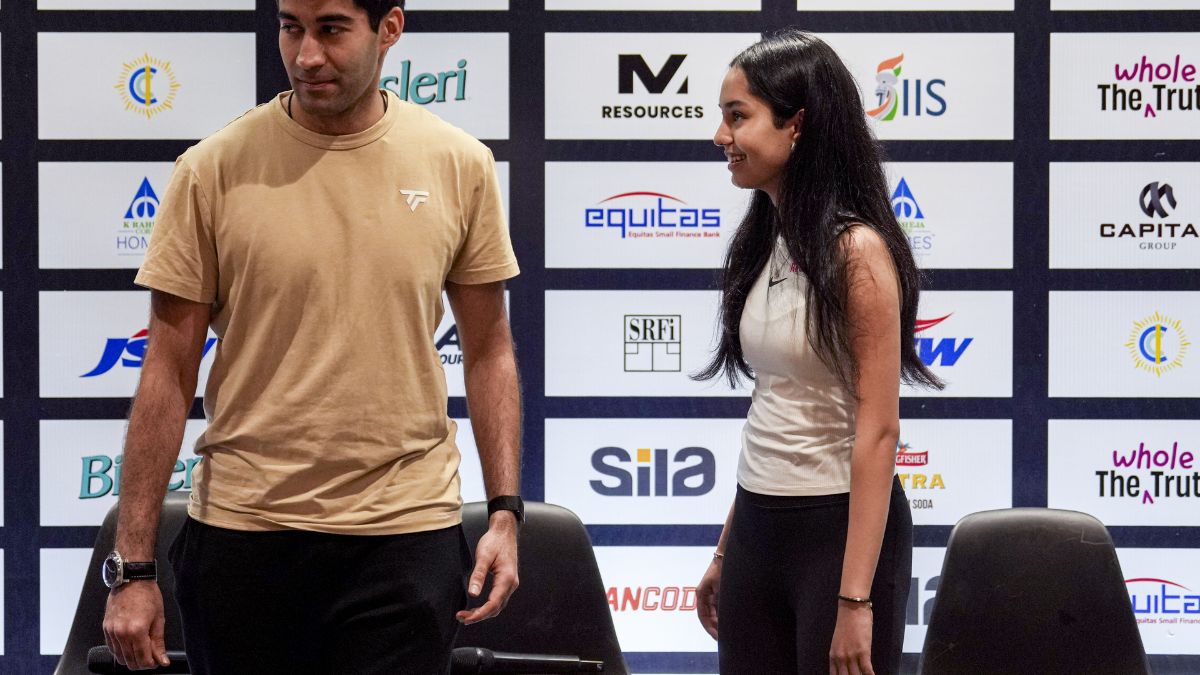
After a degenerative hip condition forced him to retire from professional squash in 2025, Ghosal continued his association with the sport as a mentor. One of his biggest projects has been guiding Anahat Singh, helping transform a talented youngster into a complete player.
Ghosal always believed that Anahat’s biggest strength was not just her ability, but her mentality.
“One of the things about her is that she’s a very, very competitive person. She really wants to win, and she has this unwavering drive to win. I think that’s very important.” Saurav Ghosal told myKhel last year.
“She’s very open-minded about improving, and that’s one of her biggest strengths.”
That hunger to improve has been a key part of Anahat’s journey. Ghosal believes the changes they have worked on over the last few years are now becoming visible in high-pressure matches.
“A lot of the things we’ve worked on over the last couple of years are now becoming part of her game.”
“It’s not quite where we want it to be yet, but she’s showing signs of using those improvements in match situations and under pressure.”
One of the biggest areas of development has been Anahat’s ability to create variations in her game. According to Ghosal, her unique skill set separates her from many players of her generation.
“She has a lot of skill and she’s one of the few players in the women’s game who can vary her play so much.”
“We’re trying to make that variation as structured and as clinical as possible.”
The transformation in her technique has also been remarkable. Ghosal revealed that when they started working together, Anahat relied more heavily on her backhand, but her forehand has now become one of her biggest weapons.
“When we started, she was much more comfortable on her backhand. Her forehand wasn’t nearly as lethal.”
“Now we actually debate whether her forehand has become the better side. Both flanks are looking much more secure now.”
For Ghosal, Anahat’s growth is not about simply playing attacking squash. It is about learning how to control rallies, create opportunities and finish points intelligently.
“It’s not about hitting outright winners. It’s about creating space, playing the right shot at the right time and making the winning shot an easy one.”
“When she does that, it’s very satisfying to watch.”
The relationship between mentor and player has also brought a different kind of pressure for Ghosal. Having experienced the biggest moments as a player himself, he admits watching Anahat compete can sometimes be even more stressful.
“I almost feel more pressure watching because I’m not in control. Sometimes I’m thinking, ‘Just hit this bloody shot!'”
But beyond the pressure of the present, Ghosal sees a much bigger future for Anahat. He believes the teenager has everything required to become one of the world’s best players.
“Anahat has great potential and we believe she can be top 10 and remain a mainstay in the top 10.”
“If she keeps putting in the work over the next three, five, seven or ten years, she’s primed to win a lot for India on the world stage.”
With squash entering the Olympic stage for the first time at Los Angeles 2028, Anahat has emerged as India’s brightest hope for a historic medal.
“For LA, you’ll have to look at this current pool of players.”
“I’d be very surprised if anyone outside this pool enters the picture.”
Anahat Singh’s World Junior Championship victory is not just a medal; it is the beginning of a new chapter for Indian squash. And standing beside this young champion is a mentor who knows exactly what it takes to break barriers.
Saurav Ghosal spent his career becoming the first Indian to achieve many things. Now, he is helping Anahat Singh become the first Indian to achieve something nobody had done before.
Sometimes, the biggest win of your career is someone else’s.
Source link
#Saurav #Ghosals #Guidance #Helped #Anahat #Singh #Create #Squash #History