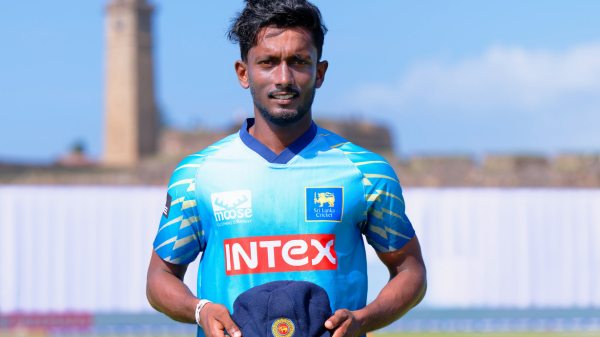
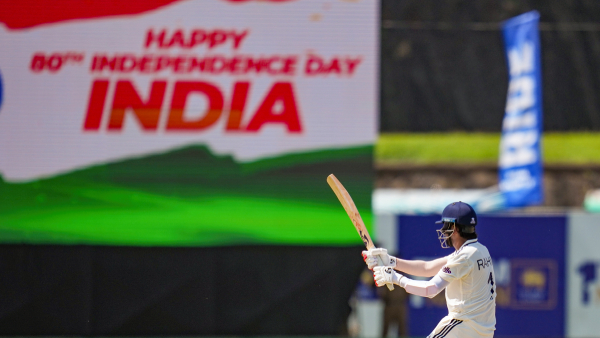

Only two nations have ever reached 600 Test matches. On August 15, 2026, India became the third. The timing could not have been scripted better.
As Shubman Gill led his side out at Galle against Sri Lanka, the milestone landed on India’s 80th Independence Day, 94 years after CK Nayudu walked out at Lord’s for the country’s very first Test.

India have now shared the field with England and Australia in a club that no amount of money, marketing, or modern scheduling can buy entry into. It can only be earned, one Test at a time, across nearly a century of cricket.
That number, 600, is not just a counter ticking over. It is the sum of a story that moves from apprenticeship to authority, from a team that struggled to win on its own soil to one that now dictates terms to visitors and hosts alike. To understand how India got here, the milestone Tests along the way tell the story better than any single scorecard could.
Team India Milestone Matches: A Century-by-Century Timeline
1st Test | June 1932 | vs England at Lord’s: India’s Test story began under CK Nayudu, and it began with promise despite defeat. Mohammad Nissar picked up a superb 5/93 in the first innings, and Ladha Ramji Amar Singh struck India’s first-ever Test fifty. England still won by 158 runs, but the performance signalled that India belonged on the stage.
100th Test | July 1967 | vs England at Edgbaston: Tiger Pataudi’s India held England in check for long periods through disciplined spin bowling, only for a batting collapse on a rain-affected surface to hand England a 132-run win. It was a defeat that captured the era: talented, competitive, but not yet consistently ruthless.
200th Test | December 1982 | vs Pakistan at Lahore: Sunil Gavaskar’s side drew a high-scoring contest in Lahore, but the personal milestone inside the team milestone was just as significant. Gavaskar reached 7,000 Test runs in this match, becoming only the fourth batter in the game’s history to do so at the time, a marker of the individual greatness now anchoring India’s rise.
300th Test | November 1996 | vs South Africa at Ahmedabad: Sachin Tendulkar’s first assignment as captain produced a statement result. Chasing 170, South Africa were bowled out for just 105 as Javagal Srinath produced a spell still spoken about among India’s great match-winning performances, sealing a 64-run victory.
400th Test | June 2006 | vs West Indies at Sabina Park: Rahul Dravid’s team won by 49 runs on a difficult Kingston surface, with Anil Kumble’s 6/78 in the final innings breaking open a tense chase. It completed India’s first series win in the Caribbean in 35 years, a result that carried weight far beyond one Test.
500th Test | September 2016 | vs New Zealand at Green Park, Kanpur Virat Kohli’s India delivered a statement of a different kind: total domination. New Zealand were beaten by 197 runs as Ravichandran Ashwin took ten wickets in the match and Ravindra Jadeja backed him up in tandem. This was the opening chapter of India’s near-unbeatable home fortress era.
600th Test | August 2026 | vs Sri Lanka at Galle: Shubman Gill leads a young, transitioning Indian squad on a turning Galle track, with the occasion doubling as a tribute to 80 years of Indian independence. A new generation now carries the weight of the milestone, and the responsibility of writing its next chapter.

Team India Journey: From 10 Wins in 100 Tests to Cricket’s Superpower
Spread across six eras, the 600-Test journey maps almost perfectly onto India’s evolution as a cricketing nation.
The Early Years (Tests 1-100): This was a period of learning far more than winning. India managed just 10 victories from their first 100 Tests, a period defined by classical, gritty batting from the likes of Vijay Merchant and Polly Umrigar, and the early emergence of India’s enduring identity as a nation of spin bowlers.
The Overseas Breakthroughs: Everything changed in the 1970s. Under Ajit Wadekar, India won maiden series in the West Indies and in England, both in 1971, proving for the first time that Indian cricket could travel and win. Sunil Gavaskar’s monumental consistency and Kapil Dev’s all-round fearlessness carried that self-belief into the following decade, and opponents stopped assuming India would fold under pressure.
The Golden Generation: At the turn of the millennium, Sourav Ganguly’s captaincy and his fearless attitude injected an aggression that had rarely been associated with Indian cricket before. With Virender Sehwag, Rahul Dravid, Sachin Tendulkar, and VVS Laxman forming one of the most feared middle orders in the sport’s history, and a potent bowling attack, led by legspin legend Anil Kumble, India began winning consistently overseas, a shift that eventually carried the team to the ICC’s No. 1 Test ranking under MS Dhoni.
The Pace Revolution and Dominance: Virat Kohli’s captaincy reshaped Indian cricket’s culture from the ground up, overhauling fitness standards and building what is arguably the finest pace-bowling attack the country has produced. Back-to-back series wins in Australia, long considered cricket’s toughest tour, followed alongside a fearsome home streak that ran from the 500th Test onward. Cheteshwar Pujara and Ajinkya Rahane carried forward the tradition of resilient, old-school Indian batting through this period, often in the shadow of the pace attack’s headlines but no less vital to the results.
The Modern Era: Today’s Indian team, shaped by the World Test Championship cycle, is aiming to define by depth. Shubman Gill, Yashasvi Jaiswal, and Rishabh Pant bring fearless strokeplay to a lineup, backed by a bench strength and workload-management approach that would have been unthinkable in the team’s early decades. While the team, undergoing transition, has had it’s fare share of setbacks at home lately, but Indian cricket is expected to bounce back.

What 600 Tests Really Means
Ninety-four years ago, India lost their first Test by 158 runs to a colonial power on foreign soil, with the nation itself still 15 years from independence. On August 15, 2026, they walked out for Test number 600 as one of only three teams in history to reach the mark, on the very day the country marked 80 years of freedom. Between those two moments lies the entire arc of Indian cricket: an underdog that learned to survive, then to travel, then to dominate, and finally to define the sport on its own terms.
The next decade in Tests belong to Gill’s generation. If the pattern of the last six milestones holds, they will not just add to the count. They will decide what kind of superpower India becomes next.
Source link
#Indias #600th #Test #Years #Turned #Underdogs #Crickets #Superpower