
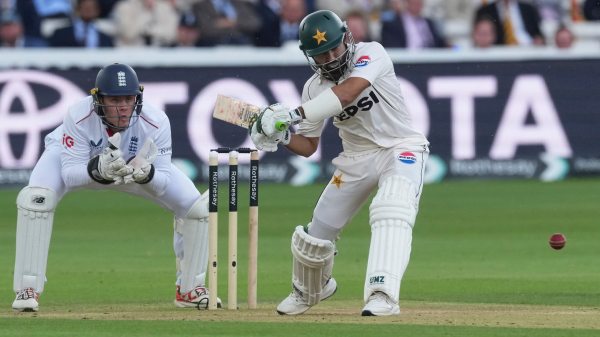

What started as a vague “disciplinary” inquiry into Pakistan’s England tour just took a sharper turn. The Lahore High Court has confirmed the investigation into Mohammad Rizwan involves online betting and gambling – the first time that specific allegation has been publicly attached to the case.

Rizwan’s petition challenging the NCCIA’s jurisdiction was dismissed after a short hearing on Thursday, with the Pakistan wicketkeeper-batter directed to respond to the agency’s queries. According to local reports, Chief Justice Aalia Neelum instructed Rizwan to approach the agency directly, explain his position, and answer the notices issued to him. It’s not yet known whether he’ll appeal the ruling or comply.
What Rizwan’s Petition Actually Argued
Filed through his lawyers on Wednesday, the petition described the investigation as targeting him over something “purportedly in respect of online betting/gambling in the sports of Pakistan cricket” – but argued the National Cyber Crimes Investigation Agency had never specified exactly what he was accused of.
His lawyer, Qazi Umair Ali, told the court the allegations were “false and baseless,” and pushed back specifically on jurisdiction, arguing that the ICC’s Anti-Corruption Unit – not a domestic cybercrime agency – is the body constituted to investigate corruption and betting allegations against international cricketers. Crucially, the petition noted that no referral involving Rizwan had ever been made to the ACU.
The petition’s own language was blunt: the allegations were “absolutely misconceived, concocted, illusionary and vague and nothing more than a vexatious and feeble attempt to malign the interest and reputation of the Petitioner.” On jurisdiction specifically, it argued that without the NCCIA identifying a specific offence or provision allegedly breached, “the exercise of jurisdiction… is not merely irregular but wholly without jurisdiction.”
The Phone Confiscation at the Center of It
A specific incident anchors much of Rizwan’s complaint. According to the petition, his mobile phone was taken from him shortly after the Lord’s Test, when he was summoned to his team hotel’s lobby at 1:00 AM by an officer described only as being “from some government agency.” He says he wasn’t given any notice or reason for the interrogation, and handed over his phone “on the assurance that the device would be thoroughly checked and returned back to him within the next 3 hours.” That assurance, the petition states, was never honored – the phone reportedly still hadn’t been returned as of the filing.
Imam-ul-Haq’s Different Path
Rizwan wasn’t questioned alone. Imam-ul-Haq appeared before the NCCIA on the same day, but rather than go to court, he completed a written questionnaire and submitted it back to the agency earlier this week. That divergence – one player challenging jurisdiction, the other complying – is itself notable, given both players were sent home from the England tour under the same circumstances.
Why This Traces Back to the England Disaster
The investigation’s roots sit in an already turbulent tour. Pakistan lost the series opener by an innings and 103 runs, then fell 194 runs short at Lord’s to go 2-0 down. That triggered sweeping changes: seven players, including Rizwan and Imam, were sent home, along with head coach Sarfaraz Ahmed and bowling coach Umar Gul. Mike Hesson took interim charge for the third Test, fielding five uncapped replacements – none of which stopped Pakistan completing a 3-0 whitewash with an eight-wicket defeat at Edgbaston.
Rizwan’s own returns across the tour were modest – 12, 41, 7, and 1 with the bat – though his wicketkeeping reportedly held up well throughout.
Two Separate Inquiries, Unclear Overlap
Adding to the confusion: the PCB has also launched its own internal disciplinary inquiry, described only as reviewing “media reports concerning discipline and conduct” under PCB regulations, without naming any players. Whether that inquiry is connected to the NCCIA’s betting-related investigation remains unclear. What is clear is that the selection process itself came under separate scrutiny – the PCB demanded a written explanation from selectors within 24 hours over why Rizwan and Imam were picked for the West Indies and England tours in the first place, a process that ended with selector Misbah-ul-Haq resigning.
The Detail That Changes the Optics
One structural fact adds real weight to Rizwan’s jurisdictional argument, even after losing in court: the NCCIA operates directly under Mohsin Naqvi, who serves simultaneously as PCB chairman and Pakistan’s interior minister. That overlap – the same individual overseeing both the cricket board disciplining its players and the government agency now investigating one of them for betting – is likely to keep questions about the process alive regardless of how Rizwan responds to the notices.
What Happens Next
With his legal challenge dismissed, Rizwan now faces a choice between direct compliance with the NCCIA and a possible appeal. Meanwhile, Pakistan’s cricketing attention shifts to the 2026 Asian Games in Aichi-Nagoya, where the men’s T20 team has a direct entry into the quarterfinals, with their first match scheduled for September 28 – a tournament that will unfold with this investigation still very much unresolved in the background.
Story first published: Thursday, September 17, 2026, 16:39 [IST]
Source link
#Mohammad #Rizwan #NCCIA #Case #Explained #Betting #Probe