

New Delhi, Oct 7: When Deepika lifted the trophy after leading India to victory in the inaugural Women’s T20 World Cup for the Blind in November 2025, it was meant to be the beginning of a new chapter. Instead, nearly a year later, the India captain is still waiting for something far more basic: a house site.
For Deepika, who hails from Madakasira in Andhra Pradesh, the celebrations surrounding India’s historic triumph have long faded. The promises made by political leaders and officials remain largely unfulfilled, leaving her and several of her teammates struggling to secure the basic support they need to build their lives beyond cricket.

“Due to our partial vision issues, we cannot move around government offices to follow up on house site issues. The government has to do its own and instill confidence among us,” Deepika said, quoted by The Hindu.
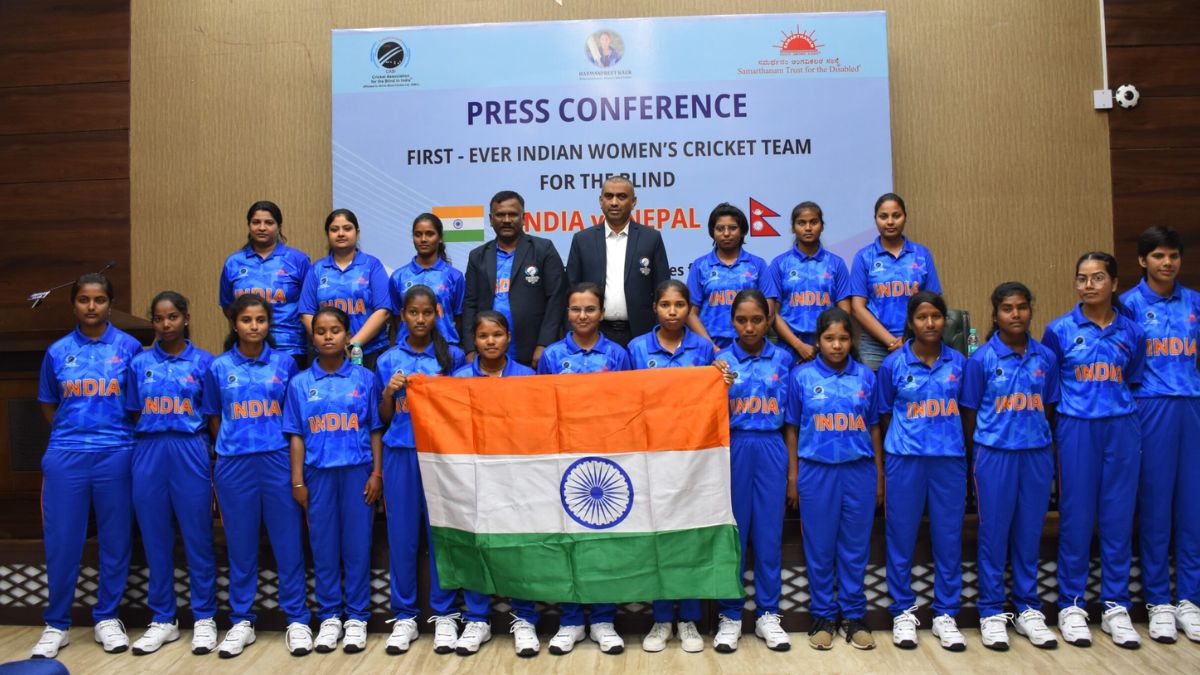
But Deepika’s struggle for survival is not a struggle of her own; it is a shared political chorus by 16 members of the Indian squad who won the tournament. Most of these players are aged between 16 and 28 and largely come from economically vulnerable sections.
For some, the challenge begins long before they step onto the field. Playgrounds and proper fitness facilities are difficult to access in their hometowns, while travelling to major cities for specialised training is often beyond their financial means. Added to these problems, the government has remained elusive in addressing the problems faced by these cricketers.
Deepika’s performances on the field underline just how much potential exists within this team. During the World Cup, she produced one of the tournament’s memorable knocks, smashing 92 runs from just 45 balls against Australia.
Yet even such achievements have not translated into the stability many of these players had hoped for.
Pangi Karuna Kumari, from Paderu in Alluri Sitharama Raju district, is among those waiting for a government job. For her, employment is not merely about recognition or reward; it is about being able to support her family and secure a more stable future.
Across the country, teammates including Simu Das of Assam, Sushma Patel and Durga Yevle of Madhya Pradesh, Jamuna Rani of Odisha, Anikha Devi of Jammu and Kashmir and Kavya N.R. of Karnataka are facing similar uncertainty.
The Cricket Association for the Blind in India scouts players from villages across the country and provides them with training, but sustaining that support requires coaching, fitness programmes, food, equipment and travel, one that many of the players and their families simply cannot bear.
Unexpected Help Arrives
However, in this long tunnel of darkness, there have been occasional supports which have come in the form of bright light for these players.
At an event organised by the Sri Gurudeva Charitable Trust at Mangalampalem in Vizianagaram district on October 4, Hindustan Shipyard Limited stepped in with financial assistance. Under its corporate social responsibility programme, HSL provided ₹50,000 to each member of the World Cup-winning squad.
Team manager and coach Shikha Shetty expressed her gratitude to HSL Chairman and Managing Director Rear Admiral Chandrasekharan Raghuram and Director (Finance) Kiran for the contribution.
For the players, the assistance comes at an important time. India are scheduled to face Nepal in a series in New Delhi in December 2026, and Shetty believes the support will help boost the team’s morale ahead of the assignment.
But one-off contributions cannot replace the larger institutional support the players say they need.
The team’s success has already demonstrated what is possible when talent is given an opportunity. What remains is ensuring that their lives away from the cricket field receive the same attention as their achievements on it.
Raparthi Jagadish Babu, founder of the Sri Gurudeva Charitable Trust, has urged MSME Minister Kondapalli Srinivas to ensure dedicated support for players from Andhra Pradesh.
For Deepika and her teammates, the hope is simple: that the applause they received after becoming world champions will eventually translate into something tangible, a home, a job, access to training, and the confidence that their country stands behind them. They have already made history.
Now, they are waiting for the support that was promised when they did.
Story first published: Wednesday, October 7, 2026, 11:26 [IST]
Source link
#Champions #Home #Indias #Blind #Women #Cricketers #Await #Promised #Support