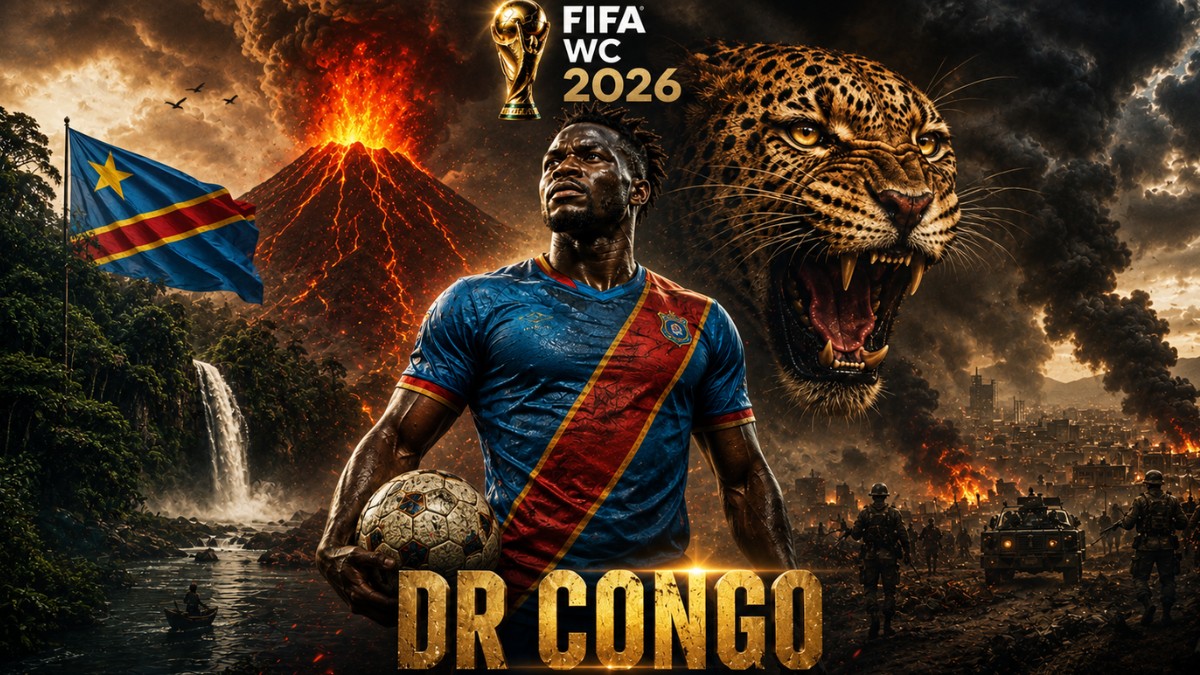

As the FIFA World Cup 2026 unfolds, one of the most anticipated matches in Group K pits Portugal against the Democratic Republic of the Congo (DR Congo).
The Leopards (Les Léopards), absent from the World Cup since their 1974 appearance as Zaire, earned their ticket through the playoff tournament. This clash in Houston symbolizes a thrilling showdown: European powerhouse Portugal, led by icons like Cristiano Ronaldo, versus a resilient African side packed with talent and national pride.

Where is DR Congo?
The Democratic Republic of the Congo lies in Central Africa, straddling the equator. It is the second-largest country in Africa (after Algeria) by land area, covering about 2.345 million square kilometres.
It shares borders with nine countries: the Republic of the Congo (west), Central African Republic and South Sudan (north), Uganda, Rwanda, Burundi, and Tanzania (east), and Zambia and Angola (south). A short 40-km (25-mile) coastline touches the Atlantic Ocean in the west.
The geography features the vast Congo River Basin, savannas, and plateaus. The capital, Kinshasa, sits on the Congo River, facing Brazzaville across the water – the only pair of capital cities on opposite banks of a river.
Five Dangerous Facts about DR Congo
Dangerous and Extreme Facts About DR Congo
While DR Congo showcases breathtaking natural wonders and cultural richness, it also faces some of the world’s most severe challenges. These realities, particularly in the east, stem from decades of conflict, resource struggles, and environmental factors. Many governments issue Level 4: Do Not Travel advisories due to crime, unrest, terrorism, kidnapping, and health risks.
1. One of the Deadliest Conflicts Since World War II
The Second Congo War (1998–2003) and its aftermath caused an estimated 5–6 million deaths — the highest toll of any conflict since WWII, mostly from disease and starvation rather than direct combat. Fighting in the east continues today with over 120 armed groups active, including the Rwanda-backed M23. Clashes have displaced millions and caused thousands of deaths in recent escalations.
2. The “Rape Capital of the World”
Eastern DRC has earned this grim label due to widespread use of sexual violence as a weapon of war. Militias and security forces have subjected hundreds of thousands of women and girls to gang rape, mutilation, and other atrocities. It remains one of the most dangerous places on Earth for women and children, with a culture of near-total impunity.
3. Ongoing Ebola and Multiple Disease Outbreaks
A major Ebola (Bundibugyo strain) outbreak in Ituri Province has no approved vaccine or specific treatments. It has been declared a Public Health Emergency of International Concern, with hundreds of confirmed cases and deaths, compounded by conflict hindering response efforts. Other threats include mpox, cholera, yellow fever, malaria, and high child mortality.
4. Volcanic and Wildlife Dangers
Mount Nyiragongo, one of the world’s most active and dangerous volcanoes, erupted in 2002, sending lava through Goma at high speed. It threatens Lake Kivu, where a limnic eruption could release massive carbon dioxide and methane. The dense Congo Basin rainforest harbors deadly wildlife: aggressive hippos and crocodiles in rivers, venomous snakes and spiders, and large predators.
Despite these hardships, the Leopards’ qualification for the 2026 World Cup represents a beacon of national pride and resilience.
Story first published: Wednesday, June 17, 2026, 22:56 [IST]
Source link
#Congo #Country #Ravaged #Conflict #Ebola #Natural #Disasters #FIFA #World #Cup