
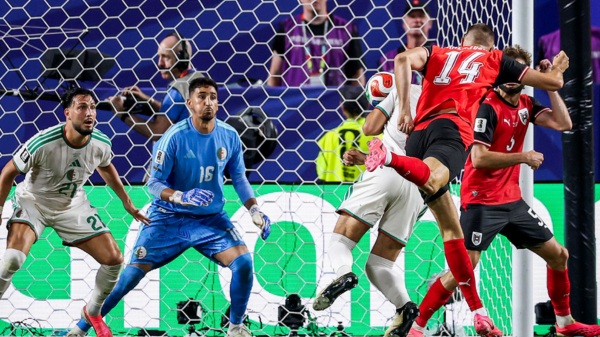

The final Group J clash between Austria national football team and Algeria national football team carried more than just knockout-stage implications at the 2026 FIFA World Cup.
Before kickoff, many fans feared the match could mirror one of the darkest moments in World Cup history-the infamous ‘Disgrace of Gijón’ from 1982. Instead, the two teams produced a six-goal thriller that ended 3-3, with both sides securing qualification while eliminating Iran national football team.

What was the ‘Disgrace of Gijón’?
The ‘Disgrace of Gijón’ refers to the controversial group-stage match between Austria and West Germany national football team at the 1982 FIFA World Cup in Spain.
Heading into the final group match, both European teams knew that a 1-0 victory for West Germany would send both nations into the next round while eliminating Algeria.
West Germany scored through Horst Hrubesch in the 10th minute. After the goal, both teams virtually stopped attacking, spending the remaining 80 minutes passing the ball around without attempting to score. Furious fans inside the stadium jeered, while Algerian supporters waved banknotes in protest, believing the result had been manipulated.
Although FIFA found no evidence of rule-breaking, the match became known worldwide as the “Disgrace of Gijón” and remains one of football’s most infamous controversies.
How did FIFA respond?
The fallout from Gijón changed the way the World Cup is played.
To prevent teams from knowing exactly what result they needed, FIFA introduced simultaneous kick-offs for the final matches in every group from the 1986 World Cup onwards. The rule has remained in place ever since and is designed to reduce opportunities for tactical collusion.
Why were fans worried before Austria vs Algeria?
The expanded 48-team World Cup created another unusual scenario.
Before the final Group J match:
- Argentina had already qualified as group winners.
- Jordan had already been eliminated.
- Austria and Algeria both knew a draw would send them into the Round of 32.
- Iran needed either Austria or Algeria to win in order to qualify as one of the best third-placed teams.
That mathematical situation led many supporters on social media to joke about a potential “Disgrace of Kansas City,” fearing the teams might simply settle for a mutually beneficial draw.
Both coaches dismissed those suggestions before kickoff, insisting their teams would play to win.
How Austria and Algeria avoided another controversy
Instead of producing a dull stalemate, Austria and Algeria delivered one of the matches of the tournament.
The lead changed hands repeatedly:
- Marko Arnautović gave Austria the lead.
- Rafik Belghali equalised before half-time.
- Marcel Sabitzer restored Austria’s advantage.
- Riyad Mahrez levelled once again.
- Mahrez appeared to have won it for Algeria with a stoppage-time goal in the 93rd minute.
- Just three minutes later, Saša Kalajdžić headed home a dramatic equaliser to make it 3-3.
The result meant Austria finished second in Group J, while Algeria advanced as one of the tournament’s best third-placed teams. Iran, despite remaining unbeaten in the group stage, missed out on qualification in heartbreaking fashion.
A tale of redemption 44 years later
For Algeria, the result carried added emotional significance.
The North African nation was the biggest victim of the 1982 controversy, missing out on the knockout stage despite defeating eventual finalists West Germany earlier in the tournament.
Forty-four years later, another Austria-Algeria World Cup meeting could have produced similar controversy. Instead, the teams delivered an end-to-end contest featuring six goals, two stoppage-time strikes and constant attacking football-ensuring the fixture will be remembered as the complete opposite of the infamous ‘Disgrace of Gijón.’
Story first published: Sunday, June 28, 2026, 13:39 [IST]
Source link
#Austria #Algeria #fans #feared #Disgrace #Gijón #FIFA #World #Cup #teams #avoided