
It requires time for a renaissance. Although Judo has been an ever-present sports discipline in India, the remarkable performance in judo at the 2026 Commonwealth Games did not happen overnight.
Behind the podium finishes lies an eight-year project driven by patience, meticulous planning and an unwavering belief that India could compete with the world’s best despite entering one of the sport’s most fiercely competitive landscapes.

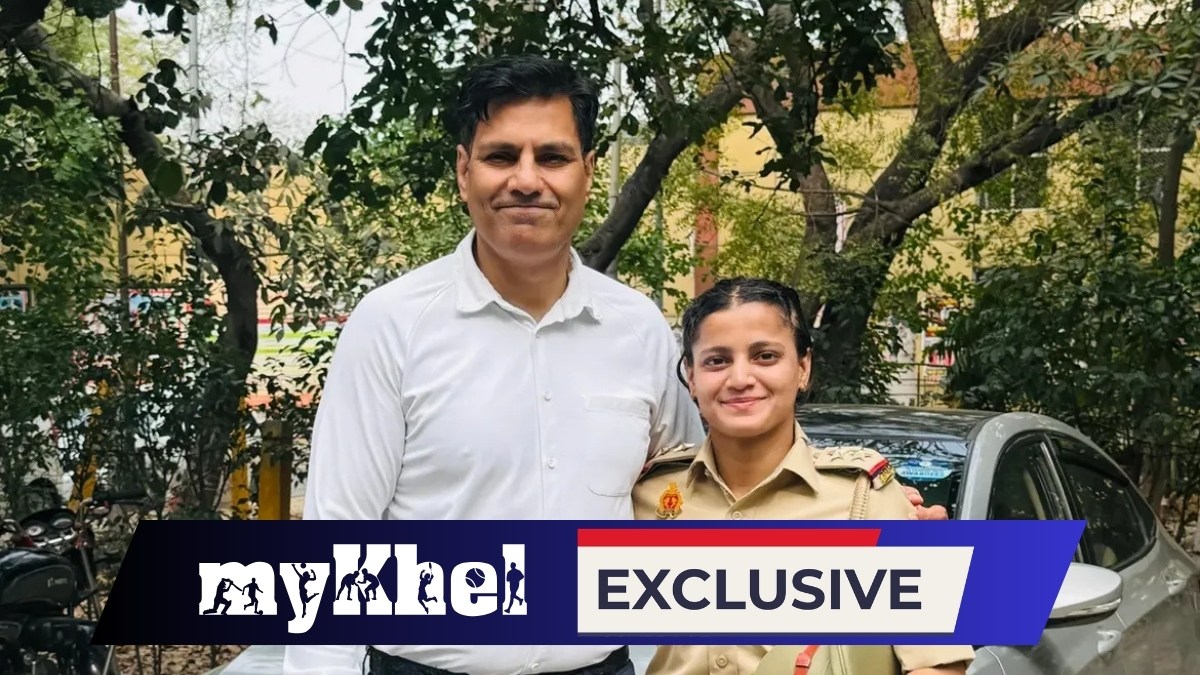
For India’s High Performance Director Yashpal Solanki, Glasgow was less a destination than the first major validation of a vision he had been carrying inside a folder since 2018.
Speaking exclusively to MyKhel after India’s historic Commonwealth Games campaign, Solanki reflected on leaving a secure government career, nurturing athletes as family rather than merely competitors, using data as the foundation of every decision and why India must dramatically expand participation if it hopes to become an Olympic sporting powerhouse.
“Eight years ago, I carried my vision in a bag”
When asked whether he had imagined India’s rise years in advance, Solanki smiled before recalling a conversation that altered the course of Indian judo.
“Eight years ago, I left a very good job in intelligence because I believed Indian judo could reach the podium. When I met SAI’s Sandeep Pradhan, he asked me a simple question-‘Do you have a vision?’ I immediately opened my bag and showed him my roadmap. I told him I would need seven to eight years to build athletes capable of winning medals consistently.”
That vision, he explained, was never about chasing overnight success.
“Judo is among the most competitive sports in the world. There are more countries affiliated with the International Judo Federation than there are member nations in the United Nations. At every Grand Slam, you have around 70 athletes in a single weight category. Building champions in this sport demands patience.”
Watching the same youngsters entrusted to him through the Sports Authority of India’s developmental programmes climb the Commonwealth podium, therefore, carried immense emotional weight.
“These are the very children SAI entrusted to us years ago. Today they have become Commonwealth Games gold medallists. But I believe this is only the beginning. There are four or five more athletes who are capable of reaching that level.”
More than a coach: Building a family
One of India’s brightest stars in Glasgow was Asmita, whose rise Solanki has witnessed from her teenage years. Solanki first met Asmita at SAI Bhopal and since then, she has been under his tutelage. And he insists coaching extends well beyond technical instruction.
“An athlete leaves home at the age of 15 or 16. Why would they trust you unless you build a family bond? Coaching is not only about technique; it’s about making them feel they are never alone.”
Recalling Asmita’s early days, Solanki reveals how the relationship developed.
“When Asmita travelled alone from Assam, she used to arrive late at night and feel scared. I taught her how to share her location, how to travel safely, and I stayed awake until I knew she had reached safely. That’s the relationship I have-not only with Asmita, but with all my athletes.”
Many have advised him to maintain professional distance, but the bridge between being a caring mentor and being professional is too far to cross for Solanki, who has his own methods.
“People tell me to remain professional. But no profession says you cannot treat your athletes like family. That trust is what allows a coach to truly influence an athlete.”
The quality that makes Asmita different
While Asmita has emerged as one of India’s biggest hopes, Solanki believes her defining trait is mental rather than physical. He has been nothing less than a father to her, and has guided the Indian judoka in every step of her career.
“Asmita’s biggest strength is her willpower. She simply refuses to give up. Along with a few others in her generation, she has an extraordinary fighting spirit and always listens to her coaches.”
That resilience, he explains, is deliberately cultivated.
“We don’t just train on the mat. We discuss books, habits, discipline and personal growth every day. I encourage my athletes to read, reflect and share what they learn because excellence is built through daily habits.”
The data behind India’s Commonwealth breakthrough
Long before Glasgow, Solanki believed India needed to send a bigger judo contingent to multi-sport events. Instead of relying on emotion, he relied on evidence.
“After the Paris Olympics, I carried out a detailed data analysis and sent it to the IOA and the Judo Federation. I showed that judo had one of India’s highest medal conversion rates. If we could send six athletes, we could realistically win three medals. If we sent 12 or 14, naturally our medal prospects would increase.”
He stresses that advocating for judo was simply part of his responsibility.
“It is the federation’s responsibility to look after every sport. But as a judo professional, it is my duty to promote my sport-and data was the strongest argument I had.”
India’s impressive medal haul at the 2026 Commonwealth Games has now vindicated that approach.
India’s problem is participation, not population
For Solanki, one statistic has long been misunderstood.
“People ask why a nation of over a billion people does not win enough Olympic medals. That is the wrong question. Ask instead how many people actually participate in Olympic sports. Unless participation increases, your talent pool will always remain limited.”
He believes increasing grassroots participation is the single biggest reform Indian sport requires.
“Once participation increases, competition automatically becomes stronger. And stronger competition is what ultimately produces Olympic champions.”
Judo as a force for social change
The conversation eventually moved beyond medals. Solanki believes martial arts can become one of India’s strongest tools for women’s empowerment.
“My wife was Haryana’s first female Olympian. We need more women like her involved in coaching and leadership. If more girls learn judo, they become healthier, more confident and capable of defending themselves. Sport creates confidence, and confidence changes lives.”
There is an innate requirement of martial arts being a routine in the kindergarten and elementary schools, and Solanki believes the sports must get a ‘compulsory’ status in schools.
“If martial arts become compulsory in schools, particularly for girls, I genuinely believe we can significantly reduce crimes against women over time.”
Looking towards 2036
While Glasgow represents a landmark moment, Solanki remains focused on the future. He praises the investments made in India’s high-performance ecosystem, particularly the world-class infrastructure now available to elite athletes.
“The facilities available today are world class. Years ago, I could only dream about such support systems. Today those dreams have become reality.”
And then comes perhaps his boldest prediction.
“If India continues on this path, I genuinely believe that by 2036 we can establish ourselves among the world’s leading sporting nations. Many people doubted programmes like Khelo India in the beginning, but a large part of today’s success has grown from those foundations.”
The next generation is already waiting
Although Asmita became one of the defining faces of India’s Commonwealth Games campaign, Solanki is quick to remind everyone that Indian judo’s future extends well beyond one champion.
“Asmita is not alone. There are athletes like Rohit, Unnati, Harsh, Sharda, Himanshi and many others who have been with us for eight years. They are the future faces of Indian judo. Behind every medallist is another athlete preparing to take the next step.”
For Solanki, Glasgow was never the culmination of an eight-year journey. It was the first public proof that Indian judo has finally moved beyond producing isolated champions and has begun building something far more enduring ecosystem which can challenge at the global stage.
Source link
#Vision #Bag #Building #System #Future #Yashpal #Solanki #Engineering #Indias #Judo #Renaissance #Exclusive