
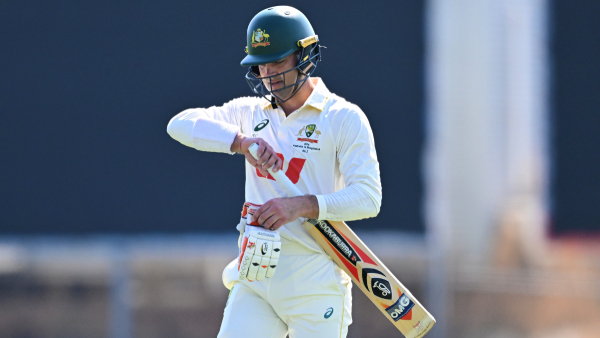

Australia’s nine-wicket defeat to Bangladesh in Darwin has exposed a batting combination that suddenly has more questions than answers. The problem was not the bowling. It was Australia’s inability to build enough runs, absorb pressure and turn individual contributions into substantial totals.
The warning signs began in the first innings when Australia were dismissed for 198 as the hosts struggled equally against pace and spin. Steve Smith’s 71 was the only meaningful contribution from the top order, leaving the rest of the batting line-up unable to establish the partnerships needed to control the Test.

That immediately put pressure on Australia’s bowlers and, more importantly, allowed Bangladesh to move ahead decisively.
The Opening Problem
Jake Weatherald’s first Test as the replacement for Usman Khawaja could hardly have gone worse. He made 23 in the first innings and was dismissed for a duck in the second essay.
One Test should not decide a player’s future, but Australia now have a genuine question at the top of the order. Khawaja’s departure was always going to leave a significant gap, and Weatherald has not yet provided evidence that he can fill it.
The selectors will have to decide whether to give him another opportunity in Mackay or look elsewhere. Travis Head failing to live up to the occasion against a spirited Bangladesh bowling attack also raises a concern for the hosts.
Labuschagne Still Searching
Marnus Labuschagne is a different problem because he is not a newcomer. The right-handed batter made 1 and 31 in Darwin, meaning Australia once again failed to get the consistent contribution they once expected from one of their premier Test batters.
The concern is not one poor Test. Labuschagne’s place has already been debated because his run-scoring has become increasingly inconsistent. His last Test century came way back in July 2023 against England.
Australia cannot afford to have both their new opener and an established top-order batter searching for form simultaneously.
Too Much Dependence on Individuals
Steve Smith’s 71 in the first innings and Cameron Green’s 104 in the second innings were excellent individual efforts, but they also highlighted Australia’s larger problem. There were too few substantial partnerships.
Green’s century came while Australia were attempting to recover from a 228-run first-innings deficit. Instead of setting Bangladesh a difficult target, he was trying to prevent Australia from suffering an innings defeat. That is a very different role for a century-maker.

The Middle-Order Balance
Australia also have an unresolved question around the composition of their middle order. Cameron Green, Beau Webster and Alex Carey all bring value, but the balance of the batting order remains uncertain. Green’s century will strengthen his case, while Webster’s all-round ability makes him difficult to leave out.
The selectors therefore have to decide whether they have the right combination or are trying to accommodate too many players without a clearly defined batting structure.
The Bowling Is Not the Main Problem for Aussies
Josh Hazlewood’s 6/89 and his 300th Test wicket were significant positives. Australia still have a formidable bowling attack. But Darwin demonstrated the limitation of relying on it too heavily. Hazlewood and the other bowlers took wickets, yet Australia could not provide them with enough runs to defend.
The first innings of 198 was ultimately the foundation of the defeat.
Australia now face a difficult selection call before the second Test. The temptation will be to make sweeping changes after a historic home defeat. But the bigger issue is identifying why the batting has become so dependent on one or two players producing rescue acts.
Weatherald needs runs. Labuschagne needs consistency. The middle order needs clarity. Until those problems are addressed, Australia’s bowling attack will continue to be asked to compensate for a batting unit that is not producing enough.
Darwin was therefore less a failure of Australia’s bowling than a warning about the structure and reliability of their batting line-up.
Story first published: Sunday, August 16, 2026, 13:40 [IST]
Source link
#Australias #Problems #Exposed #Darwin #Wrong #Pat #Cumminsled #Side #Bangladesh