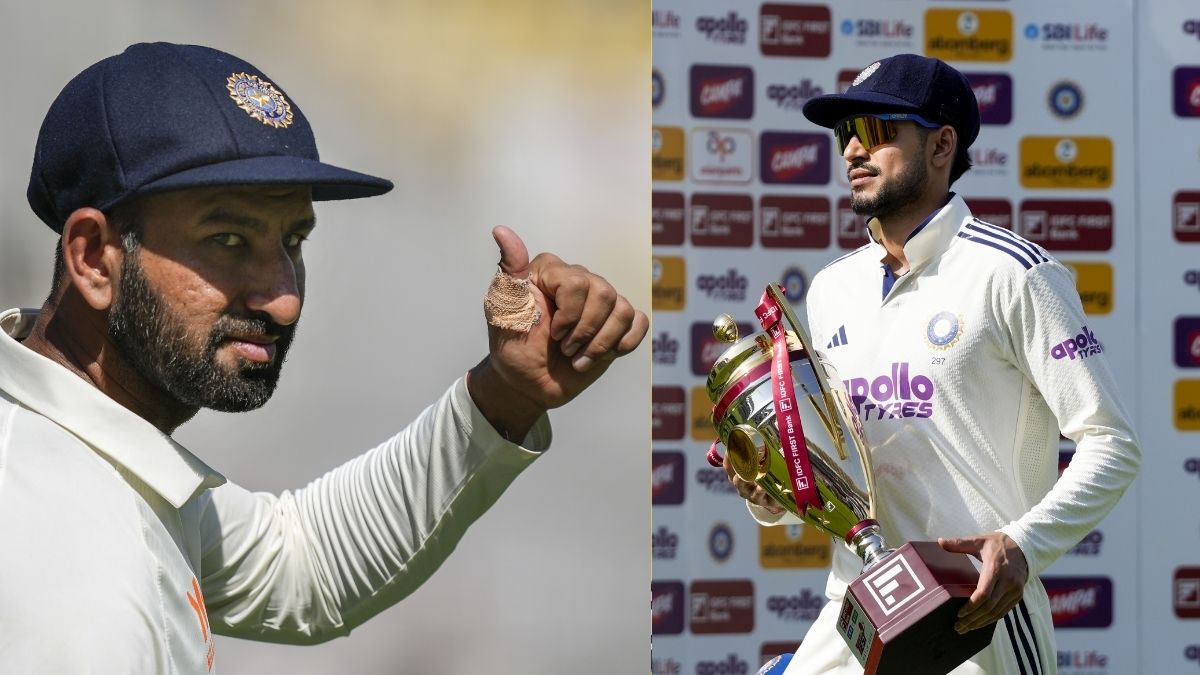

The No. 3 position in India’s Test batting order has witnessed a remarkable transition over the past five years. Once firmly occupied by Cheteshwar Pujara, the role has been like musical chairs since 2023, when Pujara stepped aside. India’s search for a dependable No. 3 batter since Pujara’s exit has seen as many as 11 players occupy the position between 2020 and 2025. While experienced names such as Rahul, Kohli and Rahane filled the role temporarily, younger batters including Padikkal and Sai Sudharsan were also tested.
Naturally, the role has gradually become one of the most debated spots in the team, with multiple batters getting opportunities amid retirements, tactical changes, injuries and changing team combinations. While some made brief appearances, others have emerged as genuine contenders to inherit one of the most demanding positions in Test cricket.

Team India is scheduled to begin its white-ball season after a long pause since the conclusion of the T20 World Cup 2026 in Sri Lanka. The number 3 will once again be in the spotlight. Here is a look at all the options tried by BCCI:
Cheteshwar Pujara (2020-2023)
Cheteshwar Pujara remained India’s first-choice No. 3 until the middle of 2023, playing 52 innings and scoring 1,529 runs at an average of 31.20. Although he managed just one century during this phase, he registered 11 half-centuries and played several gritty knocks that helped India weather difficult phases. His unbeaten 102 was his highest score during the period. Pujara’s ability to blunt the new ball and occupy the crease made him India’s dependable batting anchor before he eventually lost his place following the World Test Championship final.
Shubman Gill (2023-2025)
After the World Test Championship final in 2023, Shubman Gill voluntarily moved from opener to the No. 3 position, signalling the beginning of India’s next phase. The move has yielded encouraging results, with Gill scoring 926 runs from 23 innings at an average of 44.09. He has struck three centuries and three fifties, with a highest score of 110, making him the most successful long-term occupant of the position since Pujara.
KL Rahul (2024-2025)
KL Rahul’s stint at No. 3 was brief but productive. Promoted during India’s middle-order reshuffle, Rahul scored 108 runs in two innings at an impressive average of 54.00. His unbeaten 101 highlighted his adaptability and reinforced his reputation as one of India’s most versatile Test batters.
Hanuma Vihari (2022)
Hanuma Vihari was entrusted with the No. 3 role during India’s home series against Sri Lanka in 2022. Across four innings, he amassed 184 runs at an average of 46.00, including two half-centuries. Though he did not convert either into a hundred, his performances underlined his ability to provide stability whenever called upon.
Devdutt Padikkal (2024)
Devdutt Padikkal received an opportunity during India’s experimentation with the batting order in 2024. However, the left-hander managed only 45 runs in two innings at an average of 22.50, with 32 being his highest score. His stint reflected India’s willingness to test emerging talent during the transition period.
Sai Sudharsan (2025)
Sai Sudharsan’s Test debut came with the added responsibility of batting at No. 3 during the England tour in 2025. The young left-hander responded positively, scoring 78 runs in two innings at an average of 39.00, including a maiden Test fifty. His early performances suggested he possesses the temperament required for the crucial first-drop role.
Virat Kohli (2024)
Virat Kohli’s appearance at No. 3 during this period was purely situational. Promoted against New Zealand in Bengaluru due to team requirements, Kohli’s only innings in the position ended without a run. The move was temporary, with the former captain returning to his customary batting position thereafter.
Washington Sundar (2025)
Known primarily for his all-round abilities, Washington Sundar was surprisingly promoted to No. 3 as part of a tactical experiment. The gamble produced encouraging signs, as he scored 63 runs from two innings at an average of 31.50, including an unbeaten half-century. His performances showcased the depth and flexibility available to India’s batting unit.
Ajinkya Rahane (2021)
Ajinkya Rahane featured at No. 3 only once during this phase, scoring four runs. His promotion came during an unusual match situation while leading the side and was never intended to be a permanent positional change.
Karun Nair (2025)
Karun Nair’s return to the Test setup saw him handed an opportunity at No. 3, but he found runs hard to come by. Across two innings, he managed only 28 runs at an average of 14.00, with 19 being his highest score.
Shreyas Iyer (2023)
Shreyas Iyer’s appearance at first drop came as a tactical move to counter spin during a Test in 2023. Although he batted there only once, scoring 26 runs, the promotion reflected India’s flexible approach towards batting positions based on match situations.
Story first published: Wednesday, July 29, 2026, 16:04 [IST]
Source link
#Pujara #Gill #Indian #Cricketers #Bat #Tests