


We independently evaluate all recommended products and services. Any products or services put forward appear in no particular order. if you click on links we provide, we may receive compensation.
Haircut numbers and hair clipper sizes are shorthand for a clipper’s approximate cutting length: higher numbers generally leave more hair. They are a useful starting point, but the finished result also depends on your hair, the clipper and your barber’s technique.
VISUAL GUARD COMPARISON
Visually Compare Clipper Guard Sizes
Choose one or two common Wahl-style guards to see their relative lengths side by side on the same 0–25 mm scale. This compares measurements, not how a finished haircut will look.
Interactive comparison is unavailable here. Use the article’s guard-length chart and ask your barber to confirm the cutting length for their equipment.
For the complete measurements and examples for each guard, continue to the chart and individual haircut-number guides below.
What Are Haircut Numbers?
Haircut numbers usually refer to the attachment comb fitted to a clipper. The number is shorthand for the amount of hair the guard is designed to leave, although the finished result also depends on the clipper, blade setting, cutting direction and your hair.
On the common Wahl-style scale, guards run from #½ to #8 and leave roughly 1/16 inch to 1 inch of hair. “Zero” often means cutting without an attachment comb, not a universal 0 mm setting, so tell your barber both the length and where you want it.

Hair Clipper Sizes in MM: Haircut Number Chart
Use this as a practical reference for common Wahl-style guard sizes. Guard labels are not perfectly universal across brands, and the actual result can vary with the blade setting, cutting direction and hair type.
| Guard | Approx. inches | Approx. millimeters |
|---|---|---|
| #½ | 1/16 in | 1.5 mm |
| #1 | 1/8 in | 3 mm |
| #1½ | 3/16 in | 4.5 mm |
| #2 | 1/4 in | 6 mm |
| #3 | 3/8 in | 10 mm |
| #4 | 1/2 in | 13 mm |
| #5 | 5/8 in | 16 mm |
| #6 | 3/4 in | 19 mm |
| #7 | 7/8 in | 22 mm |
| #8 | 1 in | 25 mm |
About a “zero”: cutting without a guard is shorter than #½, but it is not one fixed length. Adjustable blades, trimmers and foil shavers can all produce different results.
How Haircut Numbers Look on Different Hair Types
A hair length chart tells you how much hair a guard is designed to leave, not exactly how the finished cut will look. At the same #2 or #3 setting, fine or lower-density hair may reveal more scalp than dense hair. Straight hair tends to lie differently from waves, curls or tightly coiled hair, and the direction your barber runs the clippers can change the result.
On tightly coiled hair, the visible height of the cut can be shorter than the nominal clipper guard length because the strands curl back toward the scalp. A #4 does not promise the same silhouette on every head. If you are choosing between two lengths, ask your barber to try the longer guard on a small area first. The haircut photos below are useful style references, but they are not calibrated before-and-after measurements.
What Does a #4 on Top and #2 on the Sides Mean?
It means you are asking for approximately 1/2 inch (13 mm) on top and 1/4 inch (6 mm) on the sides and back using the common guard scale. It does not automatically specify a fade: your barber still needs to know whether you want a gradual blend, a low taper or a more defined change in length. Likewise, “#2 all over” means one approximate length across the head, not a #2 fade.
Try saying: “I’d like a #4 on top and a #2 on the sides and back, blended rather than disconnected. Please check the guard lengths on your clippers before you start.” For a fade, also say how high you want the shortest part to rise. If you’re unsure, show a reference photo and start longer.
An Overview of Haircut Length Numbers
Now that we understand the basics, let’s look at common haircut lengths. The photos are style references rather than exact measurement proofs: lighting, hair texture, cutting direction, fades and blade settings can make the same guard look different.
Which Haircut Number Should You Ask For?
Start with how much scalp you are comfortable showing, not just the number on the guard. A #1 or #2 gives a close buzz with little room for styling; a #3 or #4 keeps a short, tidy shape with more coverage; and a #5 through #8 leaves progressively more hair to brush or shape. These are starting points, not guarantees: fine or sparse hair can show more scalp at the same length than dense hair.
Tell your barber whether the number applies all over, only to the sides and back, or to a particular section of a fade. If you are unsure, start longer and check the result before taking more off. A photo of the finish you want is often more useful than a guard number alone.
Number 0 Haircut
A number 0 haircut commonly means clipping without an attachment comb, but it is not a universal measured length. The result depends on the clipper and its adjustable blade: it may leave very short stubble rather than shaving clean to the skin. Barbers often use this setting to begin a buzz cut or build the lower part of a fade. If you want a true skin finish, ask for a trimmer or foil-shaver finish and confirm how high it should go.

Number 1 Haircut
Next up is the number 1 haircut. On the common Wahl-style scale, a #1 guard leaves about an eighth of an inch (3 mm). It creates a very short, shadowed finish; how much scalp shows depends on hair density, color, texture and cutting direction. It is a useful reference for short buzz cuts and the lower sections of fades.
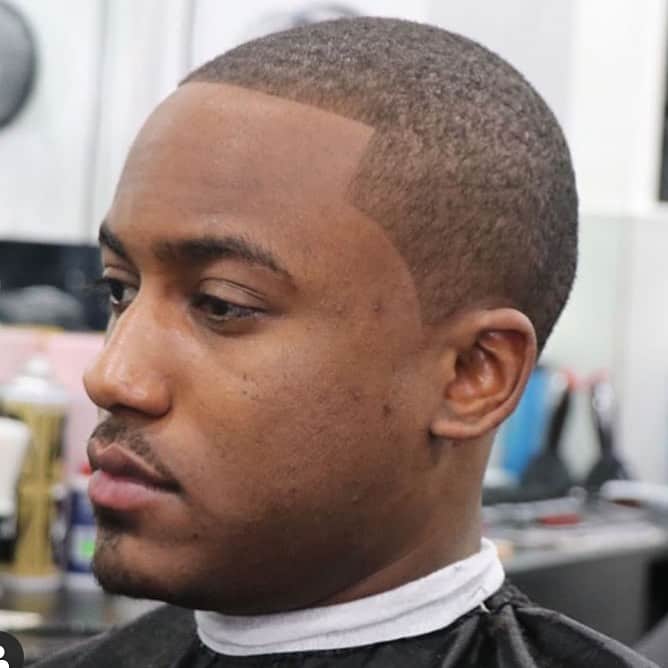
Number 2 Haircut
A number 2 haircut leaves about a quarter of an inch (6 mm) on the common Wahl-style scale. It usually shows less scalp than a #1, although coverage varies by density, color and texture. Barbers often use it for taper fades, shorter buzz cuts and neat sides with some visible texture.

Number 3 Haircut
A number 3 haircut leaves about three-eighths of an inch (10 mm) on the common guard scale. It is a useful middle ground if a #2 feels too close but you still want a low-maintenance buzz or the shorter sections of a crew cut. You will generally get more coverage than with a #1 or #2, but not enough length for a pronounced swept-back style.
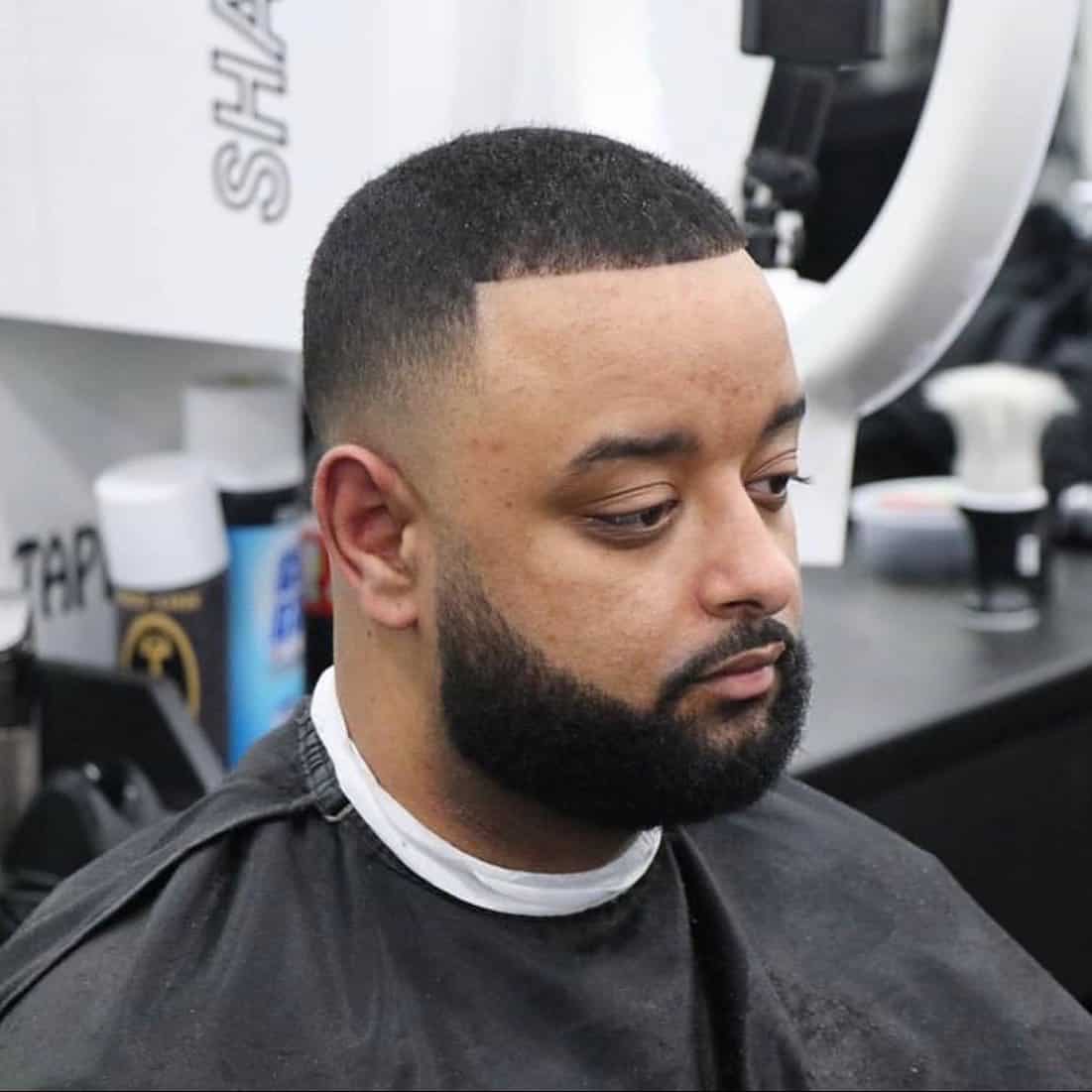
Number 4 Haircut
The number 4 haircut leaves about half an inch (13 mm). It is a sensible starting point if you want a short, even cut without the very close finish of a #1 or #2. Depending on your texture and density, there may be enough hair to show some natural direction, but a #4 is still too short for most longer, combed styles. Ask your barber to blend the sides rather than assuming the same guard all over will give you the shape in a reference photo.

Number 5 Haircut
A number 5 haircut leaves about five-eighths of an inch (16 mm). It is a good option if you want visible texture without committing to a longer top. Some hair types can be brushed into place at this length; others will sit closer to the head. A little styling powder may help create separation, but the cut and your natural growth pattern matter more than the product.

Number 6 Haircut
The number 6 haircut leaves about three-quarters of an inch (19 mm). That is enough to retain more of your natural texture and growth direction, but it is not automatically long enough for a pompadour or a slick back; those typically need extra length on top. Ask for a #6 where you want the short, fuller finish, and describe any longer section separately.

Number 7 Haircut
The number 7 haircut leaves about seven-eighths of an inch (22 mm). It suits someone who wants to tidy longer short hair without taking it down to a close buzz. It can be used all over or as part of a longer blend; a fade still needs a separate conversation about how short the sides should go.

Number 8 Haircut
Finally, a number 8 haircut leaves about an inch (25 mm) on the common guard scale. It is the longest guard in this chart, not the longest attachment sold for every clipper. Choose it if you want a modest trim while keeping a noticeably fuller shape. For a precise outline, longer fringe or a layered top, your barber may prefer scissors or a combination of tools.

Final Thoughts
Understanding haircut numbers, haircut sizes and hair clipper guard sizes can significantly improve your barber shop visits. It allows you to communicate your desired look more effectively and ensures you leave the chair feeling satisfied with your haircut.
FAQ
-
Clipper guards control the approximate amount of hair left after cutting. On the common Wahl-style scale, numbered attachment combs typically run from #½ to #8. A “zero” usually refers to cutting without a guard, and brands can label sizes differently.
-
Many full-number guards increase in roughly one-eighth-inch steps, but not every jump follows that pattern and half guards sit between some sizes. For example, a common #2 is about 1/4 inch (6 mm), while a #3 is about 3/8 inch (10 mm). Check the guard itself because brands vary.
-
Haircut numbers usually identify clipper attachment combs and the approximate length they leave. They are useful shorthand, but they are not perfectly standardized across every brand. For a clearer request, include the guard number, approximate length and where you want it used.
-
There is no single universal count. A common Wahl-style set includes #½, #1, #1½ and full-number guards through #8, while other brands offer different labels and extra sizes. “Zero” often means no attachment comb rather than a guard with a universal length.
-
Fade haircuts often use a combination of lower haircut numbers, like 0, 1, and 2, to create a gradient effect. However, the exact numbers can vary based on personal preference and the specific style of fade desired.
Remember that your ideal haircut number may vary depending on your hair type, face shape, and personal style. Experiment with different hair clipper sizes and consult your barber to find a look that suits you best.

The editorial team at FashionBeans is your trusted partner in redefining modern men’s style. Established in 2007, FashionBeans has evolved into a leading authority in men’s fashion, with millions of readers seeking practical advice, expert insights, and real-world inspiration for curating their wardrobe and lifestyle.
Our editorial team combines over 50 years of collective experience in fashion journalism, styling, and retail. Each editor brings specialized expertise—from luxury fashion and sustainable style to the latest grooming technology and fragrance science. With backgrounds ranging from GQ and Esquire to personal styling for celebrities, our team ensures every recommendation comes from a place of deep industry knowledge.
Source link
#Haircut #Numbers #Hair #Clipper #Sizes #Complete #Guide