
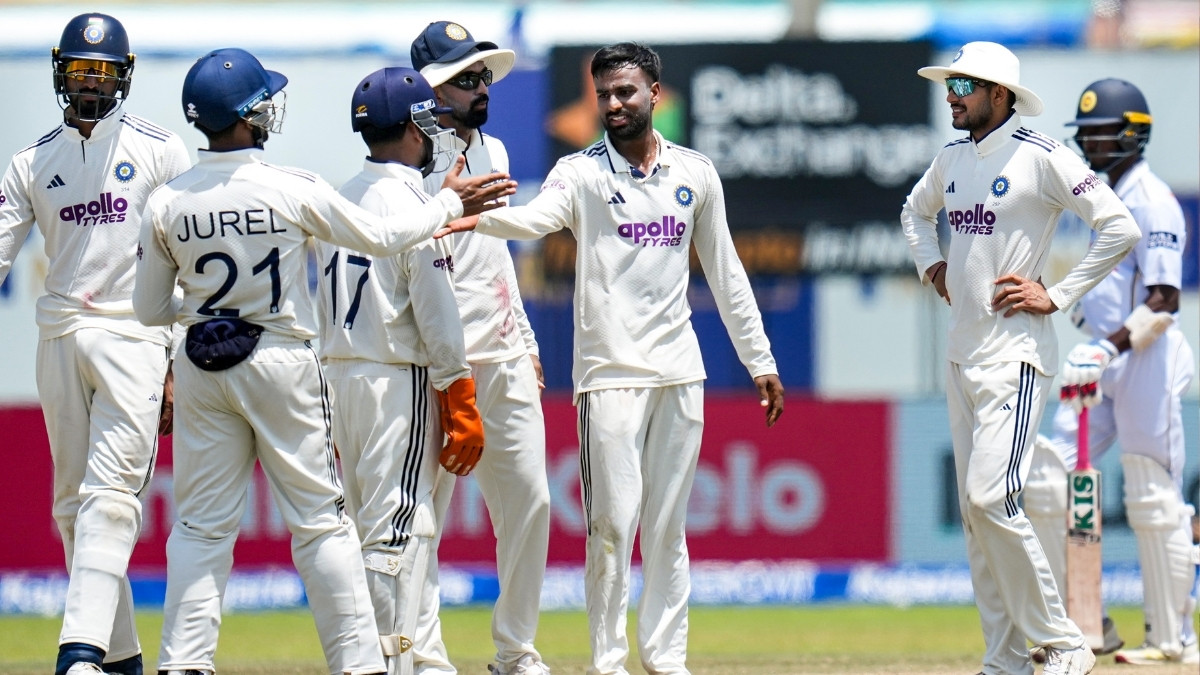

India’s 600th Test was never going to be just another entry in the record books. When Shubman Gill’s side walked out at the Galle International Stadium against Sri Lanka on August 15, India became only the third team, after England and Australia, to reach the landmark of 600 Test matches. The occasion was made even more special as it coincided with India’s 80th Independence Day.
And fittingly, the milestone was celebrated with a commanding 165-run victory over Sri Lanka, giving India a memorable result in their landmark match.

India’s journey to 600 Tests tells the story of a team that has transformed dramatically over nine decades. The numbers across every block of 100 Tests underline that evolution.
In their first 100 Tests, India managed only 10 wins, suffered 40 defeats and drew 50 matches, producing a modest win-loss ratio of 0.25. Test cricket was still a developing frontier for Indian cricket, with overseas victories particularly difficult to come by.
The next century brought improvement. Between Tests 101 and 200, India recorded 25 wins, 32 defeats and 43 draws, taking their win-loss ratio to 0.781. The team was beginning to establish itself, although consistency remained elusive.
The third block saw India register 21 wins, 26 defeats, one tie and 52 draws. The win-loss ratio rose marginally to 0.807. The high number of draws reflected an era in which India’s Test cricket was often built around resilience and survival.
India’s Transformation in Test Cricket
The real transformation began in the fourth hundred. Between Tests 301 and 400, India won 32 matches and lost 31, with 37 draws. For the first time, their win-loss ratio crossed one, reaching 1.032.
From Tests 401 to 500, India registered 42 wins against 28 defeats, along with 30 draws. Their win-loss ratio climbed to 1.5. The emergence of a stronger pace attack, improved fitness standards and a more aggressive approach to Test cricket helped India become increasingly competitive across conditions.
The defining last 100 Tests
Then came the defining period. In Tests 501-600, India produced 57 victories, compared to only 31 defeats, with two draws. Their win-loss ratio surged to 1.838, the strongest figure across any of the six blocks.
That final hundred encapsulates India’s modern transformation. The side became increasingly comfortable winning overseas, developed greater depth in both batting and bowling, and embraced a more attacking philosophy.
The 600th Test in Galle provided another chapter to that story as the Indian team look to make a strong finish in the race for a WTC final place, set to be played in 2027.
From 10 wins in the first 100 Tests to 57 in the most recent 100, the numbers tell a remarkable story. India’s Test journey has moved from survival to competitiveness and finally to sustained dominance.
The 600th Test, therefore, was not merely a celebration of longevity. It was a celebration of transformation.
Story first published: Wednesday, August 19, 2026, 19:13 [IST]
Source link
#Indias #600Test #Journey #Early #Struggles #Modern #RedBall #Powerhouse