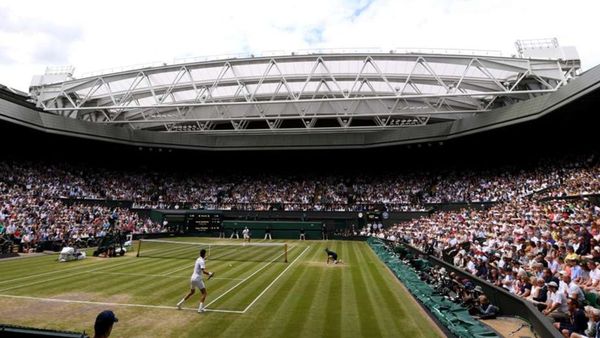

Wimbledon has announced a record-breaking 20% increase in total prize money for its 2026 Championships, responding to growing pressure from players who have been calling for a larger share of Grand Slam revenues. The move significantly boosts earnings across all rounds, including qualifying, but still falls short of what player groups had requested.
The moves comes after several top tennis players during the French Open called for a increase in the prize money in the second grand slam of the year. Some players even called for a boycott of the Roland Garros in the future if their demands are not heard.

What Has Wimbledon Announced?
The All England Club confirmed that total prize money for this year’s Wimbledon, including player per diems, will be 64.2 million pounds (about $85.8 million). Tournament officials described this as “by far” the biggest annual increase in the event’s history.
The winners of the men’s and women’s singles titles will each receive 3.6 million pounds (around $4.8 million), also a 20% rise compared to last year.
All England Club chair Deborah Jevans said at a press conference that the Committee had reviewed payouts from the top down:
“We’ve demonstrated that we’ve looked at every round, including qualifying. My hope is that the players do recognize what a significant increase this is.”
How Much Will Players Earn at Each Stage?
While the full round-by-round breakdown was not detailed in the announcement, several key figures were highlighted:
- Singles champions: 3.6 million pounds each (men’s and women’s), up 20% on last year.
- Singles runners-up: 1.8 million pounds each, an 18% increase.
- First-round losers in the main singles draw: 80,000 pounds (about $107,000), a 21% rise compared to 2024.
- Qualifying rounds: Overall prize money for qualifying will increase by 25%.
These changes mean higher earnings not only for top stars but also for lower-ranked players who rely heavily on early-round and qualifying paychecks to fund their seasons.
Why Have Players Been Demanding More?
For several years, players have argued that they do not receive a fair share of the revenues generated by the four Grand Slam tournaments: the Australian Open, Roland Garros (French Open), Wimbledon, and the US Open.
Concerns include:
- The size of total Grand Slam revenues compared with the proportion distributed as prize money.
- The financial pressures on lower-ranked players, who face substantial travel, coaching, and training costs.
- A limited player voice in how major tournaments are run and how income is shared.
Just over a year ago, 20 leading players signed a joint letter to the heads of the four Grand Slams. The letter called for more prize money and a stronger say for players in key decisions, signaling a more organized approach to negotiations.
What Did Players Ask for This Year?
According to Deborah Jevans, player representatives this year argued for total Wimbledon prize money of 71 million pounds (around $95 million), significantly higher than the 64.2 million pounds ultimately announced.
Jevans said she discussed the matter in Paris with Larry Scott, the former WTA chief executive who has been advising the players. Those talks were part of broader efforts by players to coordinate and present united demands across all Grand Slams.
How Have Players Been Protesting?
Several top players have recently escalated their rhetoric and actions around the issue of revenue sharing:
- Aryna Sabalenka, the women’s world No. 1, said ahead of the French Open that players should be prepared to consider a boycott in the future if their demands are not addressed.
- Jannik Sinner, the men’s world No. 1, along with Coco Gauff and others, publicly supported calls for a bigger share of revenues.
- At Roland Garros, some top-10 players limited their pre-tournament press conferences to 15 minutes as a symbolic protest, highlighting their dissatisfaction with how much of tournament income reaches the locker room.
These steps stop short of full-scale industrial action but indicate that leading players are increasingly willing to use their influence and visibility to push for change.
Why Doesn’t Wimbledon Simply Meet Player Demands?
Wimbledon’s prize money decisions are shaped not only by player pressure and market forces but also by its financial structure and its relationship with British tennis.
A key factor is that 90% of any distributable financial surplus from Wimbledon is passed on to the Lawn Tennis Association (LTA), the sport’s national governing body in Britain. This arrangement means that every pound directed toward prize money has a knock-on effect on the funding available for the wider tennis ecosystem.
How Does Wimbledon Support Grassroots and Elite Tennis?
The LTA uses the surplus from Wimbledon to fund:
- Grassroots participation: Programs aimed at getting more people playing tennis, including children and casual players.
- Facility upgrades: Renovation of courts and clubs around the country to improve access and playing conditions.
- Elite player development: Support for promising junior and professional players on the path to the top levels of the sport.
- Pre-Wimbledon grass-court events: Organization and support of tournaments in the British grass-court season, which help players prepare for Wimbledon.
For the 2025 calendar year, the LTA reported that the Wimbledon surplus it received fell by 4% to 48.6 million pounds (about $65 million), even though its overall revenues rose by 2%. Part of that overall increase, the LTA said, came from the introduction of a new women’s tour event at Queen’s Club.
This financial context helps explain why Wimbledon describes prize money decisions as a “balancing act”: higher player payouts must be weighed against the need to maintain long-term investments in the sport in Britain.
How Does This Fit into the Bigger Picture of Grand Slam Economics?
The dispute over revenue sharing is not unique to Wimbledon. Across all four Grand Slams, players have become more organized and vocal, arguing that:
- Prize money has grown, but overall tournament revenues have grown even faster.
- Players, as the core performers drawing audiences and sponsorships, should receive a larger slice of that growth.
- Decision-making power is concentrated in tournament and federation leadership, with limited formal representation for players.
Against that backdrop, Wimbledon’s record prize money increase can be seen as both a concession to and a partial response to these pressures. However, because it still falls short of the 71 million pounds players had targeted, the underlying tensions are unlikely to disappear.
Who Are the Key Names and What’s at Stake on Court?
Wimbledon, the oldest of the Grand Slams, begins this year on June 29.
Among the headline storylines:
- Iga Swiatek arrives as the defending women’s singles champion.
- Jannik Sinner is the defending men’s champion, having beaten Carlos Alcaraz in last year’s final.
- Carlos Alcaraz, the Spanish star and former Wimbledon winner, will miss this year’s tournament due to a wrist injury.
The significantly higher prize pool adds another layer of intrigue to the competition, increasing the financial rewards on offer at every stage of the event.
What Happens Next?
Wimbledon’s 20% prize money increase is substantial by historical standards, but it is unlikely to settle the broader debate over revenue sharing in tennis.
Key questions going forward include:
- Whether players continue to push for collective bargaining or more formal representation structures.
- How other Grand Slams will respond in their own prize money and revenue distribution decisions.
- How tournaments will balance immediate player demands with longer-term support for governing bodies and grassroots development.
For now, Wimbledon 2025 will go ahead with the biggest prize money package in its history, as the sport continues to wrestle with how to fairly divide the revenues generated by its most prestigious events.
Source link
#Wimbledon #Prize #Money #Record #Percent #Increase #Announced #Player #Boycott #Threats